Building Trust Through Research
Chapter Two
Reducing Decision Fatigue Through Research-Driven Experience Design
People don't always need more information.
They need greater confidence in the decisions they're making.
This engagement began as a familiar UX challenge. Improve navigation. Increase product discovery. Help customers find what they were looking for. Research uncovered something entirely different.

The earliest conversations focused on improving navigation. The evidence would eventually point somewhere else.
The real problem hadn't been asked yet.
Continue Reading
EXECUTIVE SUMMARY
Challenge
The project began as an initiative to improve digital product discovery and help customers navigate an increasingly complex health and wellness catalog. Early assumptions suggested that improving navigation and access to information would naturally lead to better purchasing decisions. Research revealed that the challenge extended far beyond discoverability. Customers were not struggling to find products. They were struggling to feel confident in the decisions they were making.
Approach
I led the research and strategic discovery effort, combining stakeholder interviews, qualitative customer research, behavioral analysis, empathy interviews, journey mapping, persona development, synthesis workshops, and collaborative design activities to better understand how people evaluated health products, established trust, and made purchasing decisions under conditions of uncertainty.
Outcome
The engagement produced a research-informed experience strategy supported by customer research synthesis, personas, journey maps, decision frameworks, experience concepts, and strategic UX recommendations. More importantly, it fundamentally changed the organization's understanding of the problem by reframing the initiative from improving navigation to improving customer confidence and reducing decision fatigue.
PROJECT SNAPSHOT
Role
Senior UX Strategist
Organization
LuckyVitamin
Industry
eCommerce • Healthcare • Consumer Wellness
Duration
2022–2023
Focus
- Research
- Behavioral Analysis
- Decision-Making
- Experience Strategy
- Journey Mapping
- Persona Development
- Strategic UX
Primary Deliverables
- Customer Research
- Empathy Interviews
- Journey Maps
- Personas
- Research Synthesis
- Experience Strategy
- Strategic Recommendations
- Wireframes
- Experience Concepts
Primary Outcome
Research shifted the initiative from improving navigation to improving customer confidence and informed decision-making.

This engagement became less about improving an interface and more about understanding how people make decisions when confidence is uncertain.
THE QUESTION THAT CHANGED EVERYTHING
What if customers weren't struggling to find products?
The engagement began with a familiar objective.
Improve navigation.
Increase product discovery.
Help customers locate the right products more efficiently.
These goals were reasonable. Analytics suggested opportunities to improve discoverability, simplify browsing, and strengthen the shopping experience.
On the surface, the challenge appeared straightforward.
Yet something about the brief felt incomplete. Before recommending solutions, I wanted to understand how customers actually approached health and wellness decisions long before interacting with an interface.
Sometimes the most valuable question isn't how people use a product.
It's how they decide whether to trust it.
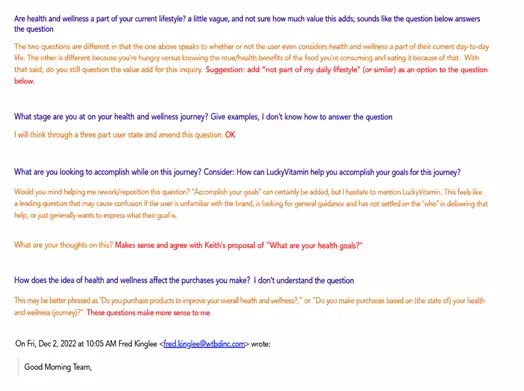
The earliest conversations centered on navigation and discoverability.
Research would eventually challenge both assumptions.
Original Assumption
- Improve navigation.
- Increase product discovery.
- Help customers browse more efficiently.
- Present more information.
- Help customers compare products.
The Question We Hadn't Asked Yet
- Why do customers hesitate after finding a product?
- What creates confidence?
- What creates uncertainty?
- How do people decide what deserves their trust?
- What makes someone feel comfortable making a health decision?
The original brief wasn't necessarily wrong.
It simply wasn't complete.

The investigation had only begun.
The most important discovery was still ahead.
LOOKING BEYOND THE INTERFACE
Good research rarely validates assumptions.
It changes what organizations believe the problem is.
As the project evolved, it became increasingly clear that improving navigation alone would not explain the hesitation customers experienced throughout the shopping journey.
People rarely struggled to locate products.
Instead, they struggled to determine whether those products deserved their confidence.
That realization fundamentally changed the direction of the engagement.
Rather than beginning with interface recommendations, I shifted the focus toward understanding how customers evaluated information, established trust, compared unfamiliar products, and reduced uncertainty before making a purchase.
Research was no longer validating ideas.
It was redefining the problem.
MY ROLE
As Senior UX Strategist, I led the research and strategic discovery effort from initial problem framing through experience recommendations.
Every activity served the same purpose:
Replace assumptions with understanding.
Design Thinking Facilitation
Qualitative Research
Stakeholder Interviews
Empathy Interviews
Participant Recruitment
Behavioral Analysis
Journey Mapping
Persona Development
Research Synthesis
Strategic UX Recommendations
Workshop Facilitation
Cross-functional Collaboration
The challenge wasn't helping people find products.
It was helping people feel confident choosing them.
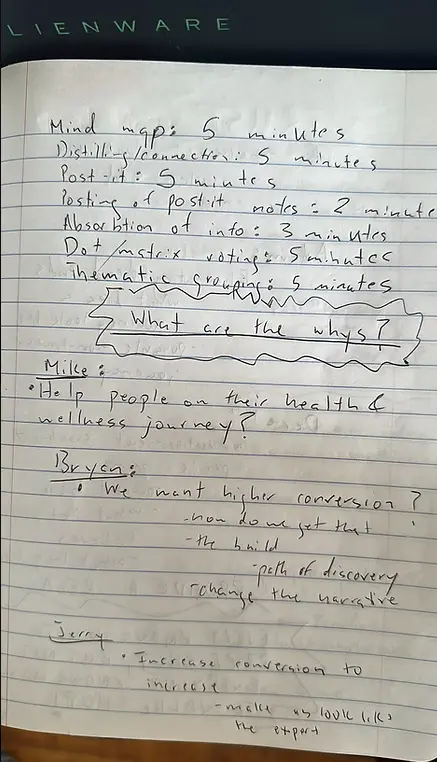
The investigation began by understanding people before evaluating interfaces.
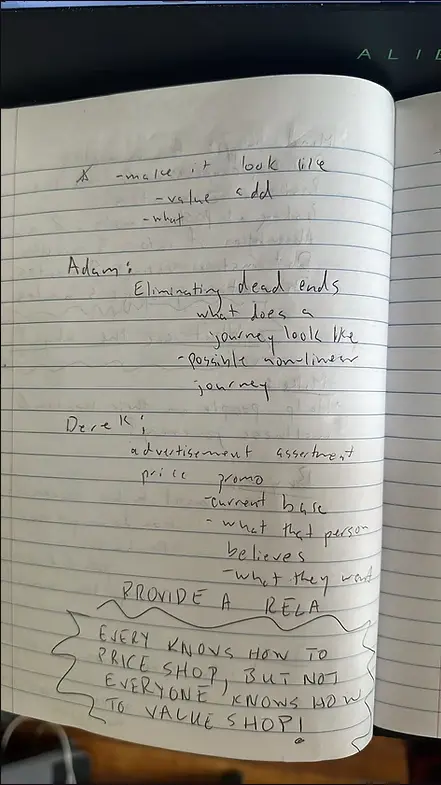
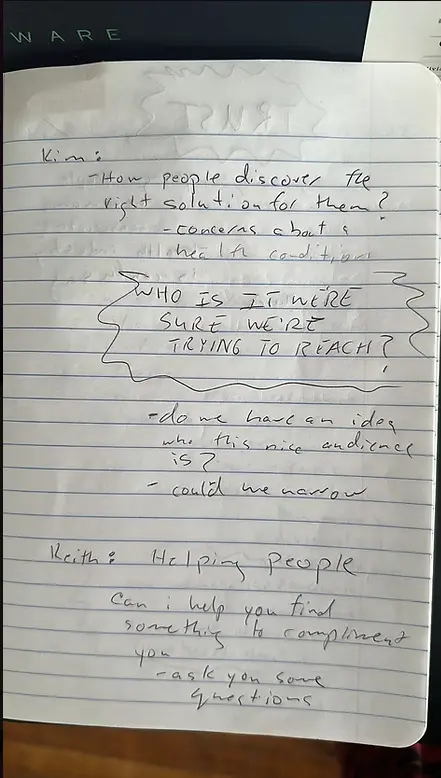
Every recommendation that followed emerged from understanding how people made decisions under uncertainty rather than how they interacted with a website. That distinction influenced every conversation, every artifact, and every strategic recommendation produced throughout the engagement.
The first interviews didn't reveal solutions.
They revealed uncertainty.
DISCOVERY CHANGED THE QUESTION
Research wasn't uncovering interface problems.
It was uncovering human ones.
The first customer interviews did not immediately reveal solutions.
Instead, they revealed patterns.
Participants described comparing ingredients across multiple products.
Searching for reassurance before making a purchase.
Questioning unfamiliar brands.
Looking for evidence they could trust.
The more conversations we conducted, the clearer the picture became.
Customers rarely lacked information.
They lacked confidence.
What initially appeared to be a navigation challenge was gradually revealing itself as a decision-making challenge.
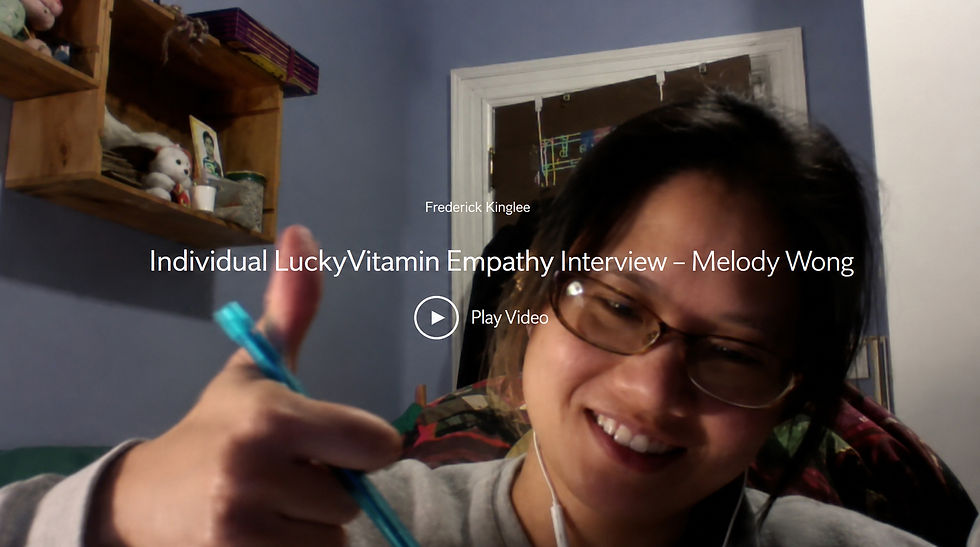
Individual interviews became evidence once patterns began emerging across participants.
Improve Navigation
↓
Improve Product Discovery
↓
Reduce Decision Fatigue
↓
Increase Customer Confidence
↓
Strengthen Trust
The project had quietly evolved beyond improving an eCommerce experience. Research demonstrated that customers were not asking for more features or more information. They were looking for guidance. Confidence. Reassurance. The engagement shifted from optimizing interactions to supporting better decisions. That distinction fundamentally changed every recommendation that followed.

Personas and journey maps transformed individual observations into a shared understanding that guided product, design, and business decisions.
The original brief could no longer explain what the research revealed.
Before Research
Navigation
During Research
Behavior
Through Synthesis
Patterns
Strategic Insight
Confidence
Organizational Outcome
Shared Understanding
Research had stopped validating assumptions.
It had started rewriting the problem itself.
THE TURNING POINT
The challenge wasn't information.
It was confidence.
By the time research synthesis was complete, the engagement no longer resembled the project that had originally been commissioned.
The organization had begun asking fundamentally different questions.
Instead of discussing navigation improvements, conversations shifted toward helping customers evaluate unfamiliar products with greater confidence.
Research had revealed that information alone rarely reduces uncertainty.
People needed context.
Guidance.
Reassurance.
The objective was no longer helping customers browse more efficiently.
It became helping people make better decisions with less cognitive effort.
That shift influenced every recommendation that followed.

Research transformed isolated observations into a shared understanding that aligned product, design, and business teams around the same customer needs.
Navigation became guidance.
↓
Content became reassurance.
↓
Research became strategy.
↓
Interfaces became vehicles for confidence.
The work had quietly transformed. This was no longer an initiative focused on improving an eCommerce experience. It had become an effort to improve the quality of customer decision-making. That distinction fundamentally changed how future opportunities were evaluated, prioritized, and discussed across the organization.
PROJECT OUTCOMES
This engagement produced a research-informed experience strategy supported by qualitative research synthesis, customer personas, journey maps, decision frameworks, experience concepts, and strategic UX recommendations. These deliverables established a shared understanding of customer decision-making that enabled product, design, and business teams to prioritize future improvements around confidence, trust, and informed purchasing rather than navigation alone.
Customer Research
Empathy interviews and behavioral analysis replacing assumptions with evidence-based understanding.
Research Synthesis
Converging qualitative observations into thematic patterns and documented behavioral insights.
Personas
Customer archetypes centered on motivations, information needs, and decision-making behavior.
Journey Maps
Visualizing the decision-making lifecycle to identify moments of uncertainty and friction.
Experience Strategy
The strategic framework aligning future digital improvements around customer confidence and trust.
Organizational Alignment
Unifying product, design, and business teams around a single understanding of customer needs.

The deliverables were never the outcome. Shared understanding was.
Research changed more than the experience.
It changed how the organization understood the experience.
Once everyone understood the problem differently...
Design could finally begin solving the right one.
DESIGNING FOR WHAT HAPPENS NEXT
The most valuable outcome wasn't a better interface.
It was a better framework for making decisions.
As the engagement concluded, something larger had quietly changed.
Research had established a common understanding across product, design, and business teams.
Future conversations became less focused on assumptions and more focused on evidence.
Rather than debating individual interface changes, teams could evaluate future opportunities through a shared understanding of customer behavior, confidence, and decision-making.
The work created more than recommendations.
It created a stronger foundation for future decisions.

Research created a shared decision-making framework that extended well beyond the original project scope.
Customer Research
↓
Shared Understanding
↓
Better Decisions
↓
Organizational Alignment
↓
Sustainable Improvement
Research no longer functioned as a project phase.
It became a repeatable capability for understanding customers before committing organizational resources.
That shift improved not only individual design decisions but also the quality of conversations surrounding future product investments.
The lasting value of the engagement was not simply what the team designed.
It was how the organization learned to make better decisions together.
Immediate Project Impact
Improved customer understanding
Shared behavioral insights
Research-informed experience strategy
Aligned cross-functional teams
Evidence-based recommendations
Long-Term Organizational Capability
Evidence over assumptions
Shared decision-making framework
Improved strategic alignment
Repeatable research practices
More confident product planning

The engagement established a repeatable way of understanding customer needs before designing solutions.
Research didn't end with the project.
It changed how future projects could begin.
When organizations learn how to understand people...
Every future decision becomes more intentional.
WHY THIS PROJECT MATTERS
Research didn't improve the experience.
It improved how the organization understood the experience.
This engagement transformed the way I think about research.
It demonstrated that research is not simply a method for validating design decisions.
It is the mechanism through which organizations learn.
Once teams develop a shared understanding of customer behavior, every subsequent conversation becomes more focused.
Every future investment becomes more intentional.
Every recommendation becomes easier to defend because it is supported by evidence rather than assumption.
That realization continues to influence how I approach every engagement today.
Understanding People
↓
Building Trust
↓
Reducing Uncertainty
↓
Supporting Better Decisions
↓
Strengthening Organizations
Although this project focused on improving a digital customer experience, its lasting value extended far beyond the interface.
The same pattern continues to appear throughout my work regardless of industry.
Identify assumptions.
Understand people.
Reveal behavioral patterns.
Create shared understanding.
Design solutions that strengthen organizational capability.
The projects change.
The thinking does not.
Research isn't a step in the design process.
It's the mechanism through which organizations learn.
This project transformed the way I think about design. Research ceased being something performed before design. It became the capability that continuously informs strategy, collaboration, prioritization, and organizational learning. Every experience since then has continued building upon that foundation.
Designing a User-Controlled Email Capture Experience
Continue to Chapter Three
Trust is not created by asking for someone's attention. It is earned by giving people meaningful control over their own experience. Chapter Three explores how research-informed decision-making evolved into designing experiences that respect user autonomy while balancing business objectives. The focus shifts from understanding confidence to designing interactions that invite engagement rather than demand it.